You’ve been passed over. Maybe twice. Maybe five times. And every single time, you ran the same fix: work harder. More hours. More scope. One more year of being the person who stays.
It hasn’t moved you. And somewhere underneath the exhaustion is a question you have never said out loud — what if I’m just not enough for the next level?
My guest in this episode will tell you that question isn’t a symptom of being stuck. It’s the cause.
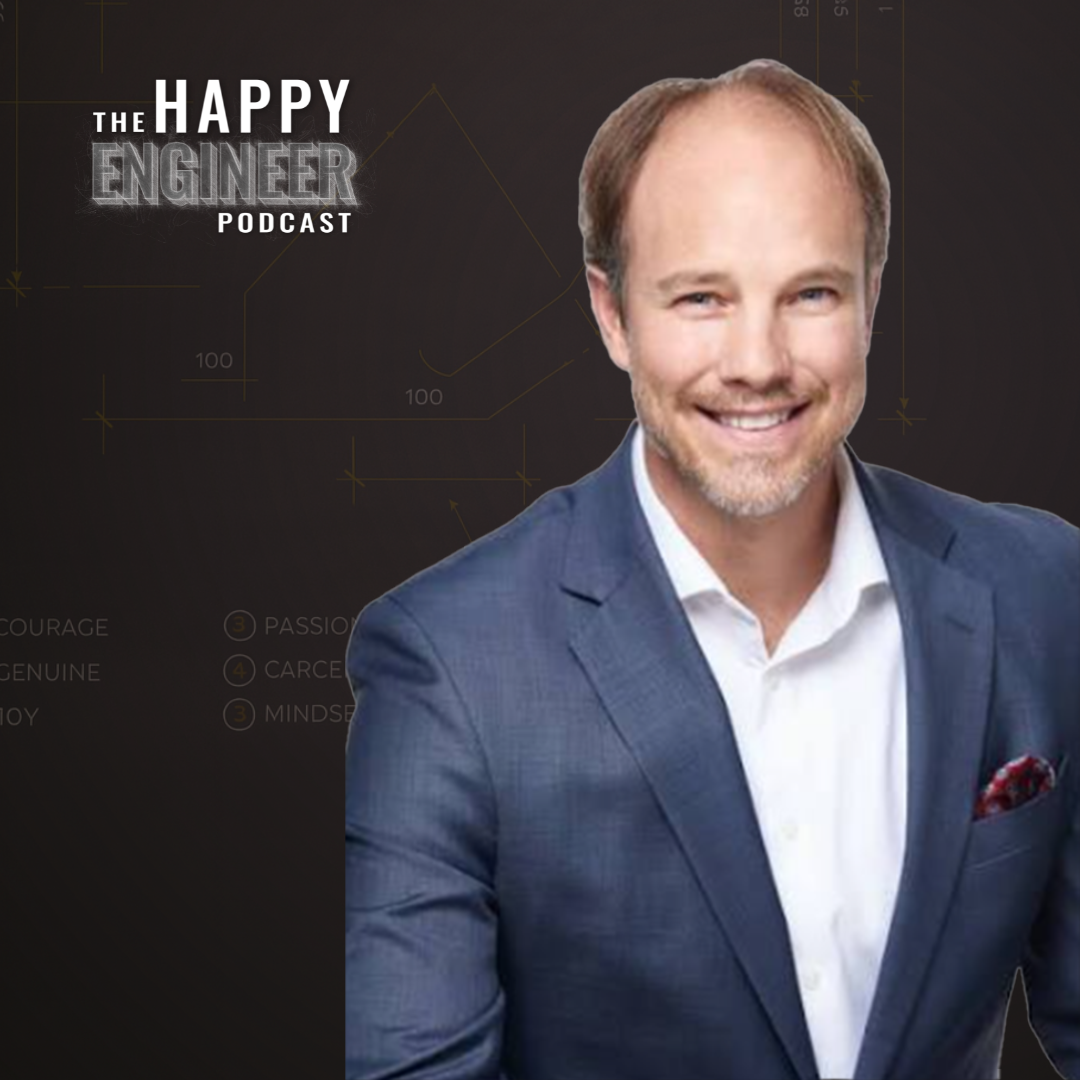
Tim Shurr has run more than 15,000 individual sessions getting underneath what people actually believe about themselves. For years he watched smart, motivated, capable people fail at things they knew exactly how to do. The sentence he heard most often should sound familiar: “I know what to do. I just can’t get myself to do it.”
He’d get them fired up. The motivation held for a week. Sometimes three. Then they’d be right back in his office.
Because it was never motivation, and it was never that they didn’t want it badly enough. They wanted it so badly they tortured themselves over it.
I pushed back hard in this conversation. I told Tim flat out how easy it is for engineers to be skeptical of this — how is working on my childhood going to help me grow faster at work? His answer, and the two questions he walks through, are the reason I’ve come back to this episode for years.
Because if you believe you’re not enough, you will never have enough. Not enough hours, not enough title, not enough proof. You’ll get the promotion and feel not-enough at a higher level.
Press play. Then go find the belief you’ve been trying to outwork.
The Happy Engineer Podcast
You’re Not Chasing a Promotion. You’re Chasing Proof That You’re Enough.
LISTEN NOW
What You’ll Learn
You’ve Been Running Root Cause Analysis on the Wrong Subsystem
Tim’s weight-loss clients came in convinced the problem was food. It never was. The event that set the whole pattern in motion had nothing to do with eating — and until they found it, no amount of discipline held. You’ve been auditing your performance, your hours, your technical depth. What if the thing capping you isn’t in that subsystem at all, and you’ve spent years optimizing the wrong variable?
“You Just Don’t Want It Badly Enough” Is a Lie. And You’re the One Telling It
Tim calls this out as abuse dressed up as motivation. The people who hear it are the ones who want it most; that’s exactly why it wrecks them. So notice who’s been saying it to you lately. It probably isn’t your boss.
What Are You Most Afraid Of? (Now Ask It Fifty More Times)
The first answer is never the real one. Neither is the third. Tim walks the ladder down in the episode. “I won’t get promoted → I won’t provide → they’ll lose respect for me → I’ll be alone → I don’t matter.” Almost everyone lands in the same place. You’ll want to stop three rungs early because it gets uncomfortable. That discomfort is the signal you’re finally close.
You Tied Your Worth to Your Level. Have You Counted What That Costs?
Tim’s line is that men get treated as success objects, and so a lot of guys tie their self-worth to their net worth. Swap “net worth” for “title” and see if it still fits. If it does, understand what that means: the promotion was never going to deliver the verdict you’re chasing. You’ll just feel broke at a higher level.
The Second Question — the One Almost Nobody Gets To
Most self-work stops at excavation. You dig up the fear, feel something, and go back to work unchanged. Tim’s second question is where it actually turns: what would I rather believe instead? Beliefs are opinions, and you’re allowed a new one. The question is whether you have the backbone to choose it before you have proof it’s true.
About Tim Shurr
Tim Shurr, MA, is a Mind Architect and the creator of the One Shift Away™ method. For nearly four decades he has helped founders, executives, and driven professionals redesign the subconscious patterns that quietly govern their performance — the beliefs that decide before you’re aware you’ve decided.
At the time of this conversation, Tim was known as the world’s foremost specialist in unconscious beliefs, having facilitated more than 15,000 individual hypnosis coaching sessions and hundreds of group training experiences. That body of work produced the One Belief Away™ Transformation Method, which remains the foundation underneath everything he teaches — including the two questions at the center of this episode.
Today his practice is aimed at high-stakes leadership. He works with venture-backed founders, Fortune 500 executives, and elite sales organizations to remove the internal constraints that slow decision-making and cap execution. He is the author of seven books, including One Belief Away! and Get Out of Your Way, an award-winning human behavior specialist, and was featured in the film Zero Limits. His work has appeared more than fifty times on television across NBC, CBS, and FOX, and on the TEDx stage.
Tim runs Shurr Success, Inc.
FULL EPISODE TRANSCRIPT:
Please note the full transcript is 90-95% accuracy. Reference the podcast audio to confirm exact quotations.
[00:00:00] Zach White: Happy engineers, welcome back! And Tim, it is an absolute pleasure to have you here on The Happy Engineer Podcast. Thanks so much for making time today, man.
[00:00:18] Tim Schurr: This is awesome. Oh, it’s an honor, Zach. I’m uh, excited to spend this time with you and to have an awesome, really amazing conversation. It will be good.
Expand to Read Full Transcript
[00:00:27] Tim, we had the privilege of connecting. I mean, I guess a couple months ago now it feels like just the other day, but in getting to know you and just hearing you speak and looking into your work, I was absolutely blown. By how many of the legends that I love you’ve spent stage time with and are friends with and authored with.
[00:00:47] Zach White: And I mean, I wrote down some of these, like Brian, Tracy, and Les brown and Bob Proctor and Jim Kakar mutual friend and our mastermind and mark Victor Hansen was just like, ah, this is so cool. You’ve had. Incredible opportunities to do work alongside some of the greatest in the realm of personal transformation and change.
[00:01:06] And I just wanted to kind of get curious, like, how did that seed get planted for you? Can you just take us back a little bit? Like where did your journey into this world of personal development and all the incredible things you do? Like where did it.
[00:01:23] Tim Schurr: well, I could take you all the way back to, uh, 1984
[00:01:27] I was 14 years old at the time and I was at home the phone rang and I answered it. Uh, hi. And the woman said, honey, find your mom. There’s been an accident. Uh, my dad was an electrician at us steel and he was working on a big electrical panel and it didn’t get tagged. Right. So while he was in there, someone turned it on and boom, it exploded.
[00:01:47] Caught him on fire. Third degree burns 40% of his goodness. Yeah, it was, it was pretty bad. And, and so he spent the next three months in a Loyola burn unit and, and, uh, we moved in with our grandparents, my sister and me, and, and we weren’t sure that he was even gonna make it. it was a pretty traumatic experience.
[00:02:05] And everybody goes through what I call big T and little T traumas. Little T traumas are being embarrassed. not getting picked to be on the team, you know, being humiliated in front of the classroom, you know, and that’s where most fear of public speaking is formed. . And so, uh, and then the big tea traumas, you know, death abuses of, various kinds, things like that.
[00:02:24] So, he did make it, and he had lots of scars on the outside, but, you know, he was always the kind of guy that would take his shirt off and go for a swim in the summer and didn’t care. And I always thought that was pretty amazing. but we all developed scars on the inside too, and we all have these little scars and they’re.
[00:02:40] it’s not just the experiences that I’ve learned over 34 years now studying us humans. It’s not just the experiences we go through. It’s the beliefs that form in our unconscious mind about what we think those experiences mean, and your brain forms those beliefs on its own without your permission. And most of those beliefs, because we’re kids.
[00:03:00] Tim Schurr: When we experience it, we have a kid like brain. That’s giving us beliefs about ourselves, about others, about the world around us, that we’re going to use as adults. so much of the anxiety that we have, the self-sabotage the struggles that we have with our health, with our money, with our relationships are because we have these unconscious belief floating around and the hard drive of our brain that we don’t even know is there.
[00:03:24] So I had lots of anxiety, lots of fear that the next bad thing could happen at any time, the rug was gonna be yanked. I wasn’t playing life to win. You know, Zach, I was playing not to lose. How do I not lose? How do I not lose? And when you play not to lose you feel like you’re losing. even if you’re winning.
[00:03:41] you know, it was never enough never had enough time, never had enough money, never had enough, people that liked me or whatever it may have been. And so, uh, I went to school for psychology for years and found that, that, um, I, I learned a lot of data, but it didn’t really.
[00:03:56] Tim Schurr: Teach me how to create fast, rapid change. That would last, you know, how do you feel good now? Yeah. You know, not 10 years from now. And so, oh, I’m sorry. I thought that was off . No worries. So anyway, um, actually,
[00:04:09] Zach White: Tim, can you, can you back up just a second though, first of all, I really appreciate you sharing that really personal moment growing up and talk about how big T trauma, like yeah, I’ve never experienced.
[00:04:21] You know, with my parents, I’ve been fortunate. My parents are healthy and my big tea trauma was around divorce. my dad disappeared from my life and really have no relationship with him even to this day. But yeah, I was curious cuz you, you talked about, okay, it creates this unconscious belief as kids that then we bring that into our adult life.
[00:04:40] But. Do you have any memory at that time, like in the days or months, years that surrounded the accident of any of that belief forming? Or was it your dad speaking to you that formed the belief? Or was it just culture in society or do you just sort of all on your own adopted this kind of play? Not to lose mentality I just like what was happening then?
[00:05:05] Do you remember anything about what you were. Abel’s consciously aware of.
[00:05:11] what a brilliant question. And I know you’re known for your brilliant questions so, no, I had no idea that was happening. It was all happening unconsciously, Or people might use the word subconsciously. But it was out of my awareness.
[00:05:24] Tim Schurr: I did not know that that was happening. I didn’t under, I didn’t know I had anxiety, All I know was that I was scared. and I was always worried, the bad things were gonna happen. And then when you go through life being scared, I attracted a lot of bullies, you know?
[00:05:38] So then I had more things to be afraid of. And then, you know, your own best friend, when there’s you and your friend, you know, your life is wonderful. And then a third person shows up another friend. And then all of a sudden, those two friends, like turn on you, you know? And so people have had those experiences.
[00:05:53] I know I did. And then suddenly. Friended like your worst enemy. And, and so, and plus, you know, I grew up in the seventies and early eighties where sarcasm was the norm. That’s what you do. You cut down everybody, you rip on everybody. When, uh, Axel rose sang about welcome to the jungle.
[00:06:09] yeah. You know, we got fun games, your experience, but, but yeah, but it trashes your mind, you know, and, it riddles people with insecurities, deep insecurities, and then we develop these dysfunctional coping strategies. And, and it’s interesting because, you know, you say, well, I didn’t have a traumatic experience as bad as yours.
[00:06:27] My dad just left and never talked to him. That’s about as bad as it gets. I mean, that’s really traumatic. That’s true people, form beliefs that, you know, I’m not good enough to stick around for, and then that starts to create all kinds of, oh, you’re gonna leave me. And then that can lead to jealousy and that can lead to all kinds of worries and fears.
[00:06:47] And you know, I’m gonna hurt you before you hurt me, all kinds of stuff forms in our brain. Sure. And then we try logical. To work through that because that’s what we do. We try to logically figure out how to problem solve and get to a solution. But unfortunately, with the tools that we have, most people never get to that core level of what was the unconscious belief.
[00:07:10] they just talk about family dynamics and it never changes
[00:07:13] Zach White: and it feels. For me, what you just said too. Like, I, I definitely do and still am doing my own, work around the things that have happened in my, in my childhood, but I definitely was not aware of any of it at the time, kind of the same, you know, experience the emotion of it or some of the difficulties of it.
[00:07:30] But I didn’t actually. Know what was going on. Yeah. Really quick. I wanna get back into your story, but you made an interesting distinction and I’m just curious if you actually define these, the, the engineer me coming out here with subconscious versus unconscious mind, do you draw a distinction of in those two words, that’s important for our conversation today?
[00:07:50] unconscious means that it is out of your awareness. It’s being stored out of your conscious awareness. Subconscious means that maybe you’re kind of aware of it, Your conscious mind is your librarian. You know, your unconscious mind is your hard drive and your subconscious is maybe, I don’t know, the somewhere in between.
[00:08:09] Tim Schurr: passing
[00:08:09] Zach White: the files back and forth. Okay. That’s really. Interesting. Okay. Yeah. And so this whole thing stirred an interest in you towards psychology. You started studying this in university and then kind of fast forward. I know you, you have what, 34 years of unbelievable experience since then, but what were the key defining moments in your career that gave you such a passion and maybe the, the aha of how to create that lasting change that now you’re famous.
[00:08:37] okay. This is fun. So I’m going to give you a couple pivotal moments that. One that I share often, but this one is earlier than that. this is how I decided to go into psychology. I had my first, high school psychology class as a senior. Okay. And, uh, still had no idea what I was gonna do. the academic advisor told me that I should pick out nice broom because that’s probably what I would be pushing after high school oh, wow.
[00:09:00] Tim Schurr: Real supportive, serious football. So is why yeah, it was kind of brutal. You know, it was that scared straight kind of attitude that everybody had back then. cuz I didn’t really care about grades. I care about getting people to like me. So I was the class clown, you know, I was trying to chase approval.
[00:09:16] And one of the things that I’ve learned Zach is that when you chase something, it runs away. So the more I chase approval, the more I never got it as I got older and I gave myself the approval that I always wanted. Then all of a sudden other people started giving it to me as well, because I gave it to myself.
[00:09:33] So I already had it. And I believe that if you don’t need it, that’s when you get. You know, like when I was 20 and starving and had no money, nobody wanted to take me out for dinner or lunch. Now every day someone calls up and says, Hey, can I buy you some lunch or dinner, a cup of coffee?
[00:09:46] And I’m like, no, I’m good. Yeah. Because I don’t need it. Right. you know? And so they show up the same is true for love validations approval support, you know, how do you know when you’re enough when you decide you. Hmm. So I was in psychology class and I’m looking at, they had set up a maze and they had little white mice running through this maze, and I’d never seen an experiment in class and I never saw a mouse in class and the teacher was chewing gum and I’m like this guy’s chewing gum in class.
[00:10:18] right. And he’s got mice running around the room in a ma. This is amazing. This is awesome. You know, what, what is this? This is psychology and you can, you can be a psychologist. And, and then what do you do? You figure out people’s heads? Oh, that’s what I gotta do. I gotta do this. That, that was the defining moment for me, where I decided I’m going to go into psychology.
[00:10:38] So then fast forward two years, and I’m sitting in a counseling processes class as a sophomore. In, uh, at Indiana university Northwest, it was an extension cuz I was too broke to go to Bloomington and um, so I went to school in Gary, Indiana. Yeah. You’re right,
[00:10:54] Zach White: right in my backyard. I live in Southwest Michigan here, Tim, so, oh yeah.
[00:10:58] Yeah. Wow. We
[00:10:59] Tim Schurr: are close. So, know, I’m sitting in class and they brought guest speakers in to talk about what they were doing. And one of them was a hypnotist. Now I didn’t know anything about hypnosis except you clock like a chicken stuff like that. Right? Sure. Yeah. Yeah. And so I thought here’s an opportunity to make the class laugh, get people like me, I’m gonna volunteer.
[00:11:16] Right. So I volunteered and I sat down and he starts telling me I’m gonna close my eyes and I’m gonna relax. I’m gonna feel amazing. And I’m like, yeah, whatever. Right. And so I close my eyes and all of a sudden I hear people giggling and I don’t. I start to go into this sense of peace that I had never felt before that knot, that was always in my stomach, that anxiety just melted away.
[00:11:40] And the next thing I know, I am so calm and so peaceful and kind of in, and kind of out and completely don’t care what anybody else is thinking of me, which was so unusual. Yeah. I felt amazing. And then I came out afterwards and people are laughing and clapping and I’m like, what’s going on? And then of course, everybody laughed.
[00:11:59] Right. And I just felt amazing. And he told me, I remembered and him telling me that I was gonna feel really confident all week and all week I felt really. Confident really peaceful. It really blew my mind. I didn’t understand what was happening and I didn’t know what that was. Cuz I had done some talk therapy and it didn’t really do anything.
[00:12:20] And so, I got hooked on this hypnosis stuff but, you know, IU was very behavioral, so they didn’t believe in anything like that. It had to be all, behavioral modification and BF Skinner, and the rats and the maze. And yeah, where those rats
[00:12:32] Zach White: C BT and all. Yeah,
[00:12:33] Tim Schurr: totally, exactly.
[00:12:34] Right. And so, we’re just, uh, robots driven by pain and pleasure. And I think, no, that there’s more to it than that. I ended up my senior. I found a hypnosis school in, um, Terre Haute, Indiana. Okay. And, they were all doctors and D uh, medical doctors and, uh, dos, MDs, and dos and one.
[00:12:55] High school co or one college, senior psychology student , which was me and okay. I talked my way in. I’m pretty good talker, I guess. And so I, I talked my way in, to Dr. Gaz Zu Kowski, allowing me to enroll in this hypnosis course and it changed my life. I, it was the best experience I ever had. My whole.
[00:13:19] And uh, changed the course of my destiny.
[00:13:21] Zach White: no kidding. okay, so this is a tough place in the journey, cuz we could easily spend. The next three hours, just talking about where that moment led you in terms of your career. And, you know, I just took a couple of stats on this from your, content online, you know, so it’s 34 years of experience, 15,000 plus sessions, one on one hundreds of groups multiple books.
[00:13:48] I’m sure if you consider academic, you know, writing, uh, just prolific in terms of what you’ve done. I wanna make sure we bring some of this pragmatically back to the happy engineer who’s listening today, but can you just tell us Tim in all of that, I mean 15,000 plus, uh, it’s unbelievable for me as a newer coach, just aspiring to that persistent pursuit of mastery that you have, taken so seriously.
[00:14:16] So in all of those moments, are there any, either breakthroughs or sessions that just really stand out as unique or for you solidified your conviction around the power of the work that you do that might just give us a little bit more meat on the bones? I mean, of course the nerd in me, the engineer in me is let’s talk about this really deep all day, but just a couple highlights.
[00:14:40] What do you, what do you.
[00:14:41] Tim Schurr: Yeah. Love your questions. You know, the, as they say, the quality of your questions determine the quality of your life. And so these are great questions. So instead of telling you a story about one specific person, I’ll tell you a story that, there might have been a thousand people that had the same okay.
[00:14:56] Experience because us humans aren’t that different, we have four basic personality types and then, you know, um, we vary within that. But the way that we operate is very much the same. And so I’ll tell you a story. I did a lot of sessions for weight loss, cuz when you’re a hypnotist, everybody wants you to stop, help.
[00:15:13] ’em stop smoking, lose weight. Sure. Of course. And then anxiety. Right. so I did thousands of sessions to help people with weight loss and people would come in and they’d say, I know what to do. I just can’t get myself to do it. what they’re saying is I’m smart. I’m logical, I’m intelligent. I could write my own cookbook.
[00:15:28] But emotionally I’m still doing the same things and I can’t seem to stop. Yes. Yes. Okay. There’s the problem. So then I think, maybe they have the solution, so what’s the solution. Well, if you could just help me get motivated. If I could just get motivated, you know, and break this bad habit, then I’ll be okay.
[00:15:44] Tim Schurr: So I would get ’em super motivated and they’re like, I’m gonna conquer the world and they would leave my office and they’d feel great for about a week, sometimes three or four weeks. And then they would always come back and they would say, I think this hypnosis stopped working. And I’m like, okay, well, let’s come back and I get ’em super motivated and it wouldn’t work as well.
[00:16:01] And over time I noticed that it’s not about motivation and it’s not definitely about, not about willpower. And it’s not that they don’t want it. Because some people like Dr. Phil used to say, you just don’t want it enough. You don’t
[00:16:12] Zach White: want it bad enough. Yeah, totally. Yeah.
[00:16:14] Tim Schurr: That’s a total lie, and it’s like, um, abusing the victim kind of, because they do want it so bad, they torture themselves over it.
[00:16:22] And then you tell ’em that they don’t want it, which is really messes with people’s minds. That is false. Right. So, what it is. I found that I was doing hypnosis sessions and I learned this technique, hypnotic regression, where you take people back to the ISE, the initial sensitizing event. Okay. Where that belief was formed.
[00:16:41] Now I didn’t understand about the belief that was formed back at the time. The idea was that you take ’em back to the moment when they had some kind of traumatic situation and you give them resources that they didn’t have before. And you have them view it from the point of view of an adult instead of a little scared kid.
[00:16:58] And I thought, okay, so I was doing that and people were coming out of that and it had nothing to do with weight loss, the situation. so I’ll be talking to someone and they, um, you know, um, I binge eat and okay, so we’re gonna go back and they go back to when they’re seven years old and they’re being abused in some.
[00:17:17] Right. And so I started helping them with the healing, from the abuse because sadly more people than not have been abused in all kinds of terrible ways. And so, we go back, we make ’em safe. We give ’em back their power. We give ’em new resources. We change. It turns out you don’t have to change the past.
[00:17:32] You just have to change the way you’re interpreting what it means. So we will give them resources so that they feel safe. They feel strong, they feel worthy, they feel protected. So I would do that. And then all of a sudden people would go and they would drop 20 pounds and they, the sugar addiction would disappear and they weren’t binging anymore and purging, they weren’t doing any of that.
[00:17:52] And I never once told them you love salads. Right. And I’m like, this is something interesting. So I started doing it with more people. And then over time I realized it’s not just giving them the new resources. They had formed a belief in their mind that I’m not worthy. I’m not good enough. I’ll be abandoned.
[00:18:13] I won’t be loved. You know, people will reject me. You can’t trust people. The world is cruel place. If you walk around with those beliefs, it completely affects what your brain pays attention to and how it makes decisions at an unconscious level. Some research says that your unconscious mind helps you determine what decision you’re gonna make a full seven seconds before you have any conscious awareness that that decision has been made.
[00:18:39] Zach White: That’s seconds. That’s
[00:18:41] Tim Schurr: unbelievable. Well, seven seconds in some cases. Yeah. And so that’s like, whoa, that’s a lot of time. Right? Cause our mind’s usually in milliseconds, right. Making so many decisions. And so that’s extraordinary. And so I started upgrading those beliefs going from, I’m not worthy to, I am.
[00:18:59] I’m not good enough to I’m More than enough. I can’t do it to, I can do it. I will be abandoned to no one can ever abandon me because I will never, I’m always gonna be here for me. I’m always gonna be my best friend. I’m always gonna have my own back. And as long as I’m here for me, I’m good.
[00:19:13] Right. Wow. And boy, you take that power back. You don’t have to wait for other people to do the right thing anymore. You give it to yourself, you lock that in and you reinforce it. and then people were having. Staggering breakthrough significant that lasted through time that were sustainable.
[00:19:30] Once you upgrade a belief, it stays upgraded. You can’t go back to thinking that old way because you know, better now. Right? And then, then over time I kept forming more experiences like, well, you know, when you upgrade those beliefs, sometimes a lot of anger, a lot of guilt, a lot of shame, a lot of rage, a lot of resentment will come up afterwards.
[00:19:47] So session two was formed. Where we were releasing all that toxic emotional energy. Yes. Yes. You know, and that deep Ealing and then bringing in forgiveness was, born. And so I started doing. So I created eight different unique experiences. I usually take people through the first four and it changes their life.
[00:20:05] And I go through these experiences and it has about a 99% success rate. There are every once in a while, someone it just doesn’t click for, and then I’ve got other tools. and then sometimes that’s just, I’m not the right fit or they’re, you know, they have some serious stuff that going on with their hardware.
[00:20:23] It’s not emotional. It’s their hardwiring of their brain, you know, really strong, intense OCD and obsessive compulsive disorder. but 99% of the time it has significant results. It doesn’t matter. I just did a session for a five year old, the other. I didn’t even know if it would work.
[00:20:40] I told him, mom, I said, don’t pay me until we know it works. And then she, she called me and gave me a credit card number. I’m like, yes, right. Five years old.
[00:20:50] Zach White: that’s I mean, and that’s so powerful because half of those, trauma experiences haven’t even happened yet. So you just to start allowing for healing to take place, even before you’ve built a.
[00:21:02] Decade of programming on top of how that’s a success strategy for you, right? Yeah. So real quick, Tim, the engineer in me has to get curious about the 1% or the 0.1%, whatever it is. And my, test engineer days, it’s like, you don’t just wanna dismiss outliers. let’s make sure we understand the special cause or what’s happening there.
[00:21:22] And how does it inform, the whole data set. is there anything that you’ve seen to be true? whether it’s, is it a bio biology? Like there’s something that doesn’t function the same in that person’s brain or the systems of their body are, different in some way, or is there something about that’s what it is.
[00:21:41] Okay. Okay.
[00:21:42] Tim Schurr: No, that’s what it is. It’s almost always, well, I actually, I’m gonna say it’s always that someone has some other stuff that’s going on. and I usually recognize it in the first session. I always give it a shot anyway, the worst that can happen is I just give ’em a refund and it didn’t go well for an hour.
[00:21:59] right. Yeah. Yeah. But the best thing that could happen is it could save their life. It changed their life. Yeah. Yeah. And so it’s definitely a hard wiring with the OCD, they could do better if they gave it more time. But sometimes because of that, they don’t wanna do.
[00:22:13] Or they will push away. Sometimes it doesn’t work because people aren’t ready. Sometimes they have secondary benefits, you know, where there’s a hit and payoff for, not changing. But usually I can help uncover that after we have, two or three sessions. But really interesting when they just flat out doesn’t work and we know it’s not gonna work, it’s almost always because they have some really intense OCD that is, um, prohibiting them from getting where they could be.
[00:22:41] in one session.
[00:22:42] Zach White: Sure. Makes sense. Yeah. So what’s super fascinating about this to me is you told the story like, Hey, there’s a thousand sessions like this and you used weight loss as an example, but the truth. the trauma or the, the was, it is E that you mentioned that initial event, initial sensitizing event.
[00:23:01] Okay. Sensitizing event had nothing to do with stuffing cake down your mouth. It’s not like had anything to do with weight. It’s completely unrelated. And so, you know, I know for the engineering leaders who I coach and I’m sure for the engineering leader, listening, to this conversation right now, the idea that.
[00:23:20] What I want most that isn’t going my way. The thing that I feel this resistance around, or frustration or anger, or even I I’m depressed or I’ve given up, or, I’ve been passed over for promotion five times, and I’ll never be smart enough to make it to that level. Or, fill in the blank thing.
[00:23:37] The notion that that could be connected to a trauma big T little T that has nothing to do. academic success or career success or whatever could be totally different is very enlightening. So I guess I’m curious, like how do we, as these analytical engineering types. Kind of get out of our own way and out of our head to be open to this, cuz I I’ll just be honest.
[00:24:02] It’s very easy to be skeptical. Like what are you, Tim? I don’t know what you’re talking about. You know, work working on my daddy issues is gonna help me grow my business faster. Like I don’t get it.
[00:24:12] Tim Schurr: Yeah. I didn’t get it either. And I was skeptical too. You know, I was the rebellious, prove it kind of guy.
[00:24:18] Yeah. You know, prove it to me. Yeah. You know? And so, um, but then I kept having these experiences over and over and I’m like, oh, well, I mean, you can’t argue with results. And then when you have thousands and thousands of results and you just keep seeing it over and over to argue. Against it. Well now, you’re on the other side of the coordinator.
[00:24:34] Well, that’s insanity to argue against sure. Kind of results. So, our beliefs definitely. There’s two things when you let’s talk about, like, I’m not getting that promotion. Okay. I’ve been passed over five times. So the first part is maybe just, maybe there is, uh, some belief that gets in the way that causes you to show up in a way where you’re not being the best team.
[00:24:56] Or you don’t think that, um, you know, spending as much time building a relationship is important, as long as you get the job done. Right. And that’s because of what you were taught growing up or how you saw your father, or mother, uh, that’s how they did it. Yeah. Right. And so that is getting in your way.
[00:25:13] It might be a blind spot that you have that you’re not even aware of. I mean, almost everybody comes to my office thinking that it’s one thing and it’s something else. They don’t know anything about this unconscious belief stuff. Unless they listen to my audio book, the power of your unconscious mind.
[00:25:29] They, they have never, heard of any of this stuff before. And so there’s a blind spot. You just don’t see what you, what you can’t see. You can’t see the label when you’re in the bottle. Right. So the other part of it might not be your technical skills because that’s what we do and that you and I have talked about that.
[00:25:46] And you had said this, that we just rely on trying to be smarter or work harder. And sometimes those aren’t the issue. When I’m doing work with corporate America and with companies and teams and stuff like that, the person that gets thepromotion, isn’t always the smartest in the room.
[00:26:02] It’s the person who, connects with the most people who has the best communication skills. And if you’re super analytical, that might not be as important to you. And so I’ve had to do a lot of work with doctors over the years and engineers over the years because, they didn’t feel like that was as important.
[00:26:21] As getting the job done and when you’re leading teams and you’re not as much in the field and you’re leading teams, which is usually what happens, they take you out of a position where you’re awesome and promote you. Yeah. sure something where you’re not as good, you know,
[00:26:36] So my son is an engineer. He’s very analytical in that way. So when he was 16, I put a copy of, I been friends and influence people. Right with Dale, Cardale, Carnegie, Dale Carnegie. I put that book in his hand and I said, read it. And he said, it changed him for the rest of his high school, because he was very, you know, you know, we were always kid like, he’s like Sheldon a little bit.
[00:26:59] you know? Sure. Totally been there. Yeah. And, um, and so when he started learning these communication skills and people skills and reading people and matching people and, and creating more rapport, He said it really helped a lot. He started to be able to get anybody to like him more in about 30 seconds and, uh, yeah, powerful.
[00:27:17] And so that’s something that you can learn these days upgrading beliefs and improving your communication skills, not your technical skills will get you that next promotion.
[00:27:28] I love this and I wanna connect back to something you said earlier, because I think it’s important. to the context.
[00:27:35] Zach White: And I hear it from engineering leaders all the time. A, it’s not that you don’t want it bad enough. You know, this idea of, if you wanted that promotion, you would actually do what it takes or work hard enough to get there, which that’s false. We work our’s false belief. Yeah. Leads to problem. Number two, that I see all the time, which is they are working their asses off and they’re already putting in 60, 70, 80.
[00:27:58] A week. Yeah. To try to get to that next level because they do actually desire it. But then that behavior leads to, an imbalance in their life where their relationships at home fall apart or their health falls apart. And they end up. Really burned out frustrated and truly feeling stuck in this kind of trap.
[00:28:18] Like, well, how much harder can I work? I’m already doing everything I know how to do. Right. And, we get into this place. And then the, maybe the shame of that belief that I need to work harder to get to it. And how do I possibly work any harder kicks in. can you, talk a little bit about this idea.
[00:28:35] Finding the belief that might actually be the root cause rather than, these things that we on the surface think are the problem, Tim, is that something you can actually discover? to your point about like the label, if you’re in the bottle, you can’t see it. Can you make, progress or break through on your own in those areas?
[00:28:53] Or is this really something that you need the support of a, a therapist to coach, a person to come alongside and. Help you with those blind spots. What’s your perspective on that? I
[00:29:04] Tim Schurr: think you, you need both, right? So I’m gonna give you a, some question, a simple question that you can ask yourself that can help you to start to get started, but you do need somebody, even if it’s, you know, my $17 book where you go through the exercises and it gives you the language and the questions to ask, because it’s too hard doing it on your.
[00:29:25] We are interrelated and interrelated species. We need each other, and it’s too hard to see your own blind spots. It’s too hard to be objective with yourself. So you do need help in some way, even if it’s through a book to give you some insights. however, you can start today by asking yourself a question, you know, um, if I’m feeling stuck, what am I most afraid?
[00:29:47] And then where did I get that idea from now? A lot of smart, strong, tough people who are in this spot who feel like, you know, I’m at work feeling like I’m supposed to be at home. And when I’m at home, I feel like I should be working and you’re getting called a workaholic and you know, but I’m doing it for the family, you know, and then never feeling like you’re appreciated anywhere, which is very depressing sometimes.
[00:30:09] we don’t think of it as being. We think it would’ve been stressed or angst or just under pressured or overwhelmed. Right. But if you dig deep enough, you realize that it actually is a fear. cuz it’s coming from scarcity. I don’t have enough money. I don’t have enough status. I don’t have enough hours in the day, to get it all done.
[00:30:28] Tim Schurr: I don’t have enough energy to keep working, a hundred hours a week, especially as I get older, I’m running out of time, you know, and that all is coming from scarcity, which comes from fear. So if you ask yourself, what am I most afraid of? And then you ask yourself that question about 50. I’d only have to ask it once with my method, cuz I know how to take you back and find it.
[00:30:48] But if you’re doing it on your own, you gotta ask yourself enough to get past the layers. You know how Shrek said, we have layers you gotta get past the layers. Right? So what am I afraid of? I’m not afraid of anything. Okay. But what am I afraid of? Um, you know, afraid I’m I’m never gonna get what I want and you know, they’re gonna block me or what, what am I afraid of then?
[00:31:07] You know, I’m, I’m afraid. Uh, I’m never gonna get there and what am I afraid of then that I won’t have enough money to take care of my family and what am I afraid of then? Well, then they’re gonna lose respect for me. Yeah. You know, or they might leave me, what am I afraid of then? Well, then, I’ll be nothing.
[00:31:23] I’ll be all alone, you know? Well, what are you afraid of then? Well, I’m afraid of that. I don’t matter. I don’t mean anything. You know, I’m not enough. Now you’re scratching the surface, the deepest fears of not being enough, not mattering. Yeah. Right. If I don’t have this, um, you know, I won’t have that a lot of times over the years, women were looked at as sex objects and men were looked at as success objects.
[00:31:49] Oof. So a lot of guys tie their self worth to their, net worth mm-hmm right. I’m my bank. And if it dips below then, I mean nothing. And if I have to make more, then, and even when I’m making more, we spend more and then we just feel broke at a higher level. And it’s this horrible game , of never feeling like we’re enough.
[00:32:10] And if you have a belief and your life is projecting out, that I am never enough, then you will never have enough. You will never get that promotion. You will never have that new job. You will never make those choices that, you know, you should. You come home, you say, I hate my job every single day. Quit and go get another one.
[00:32:26] Yeah, but I need the paycheck. Yeah. But you could actually eventually get another job where you would have a better paycheck or you would enjoy life more. You gotta close that door to get the other one to open. But people have that head trash in their mind that know what if I don’t get another job? Or what if I’m, you know, don’t get hired.
[00:32:43] And what if, what if and all that is coming from fear? Yes. So you do that, you know, what am I afraid of? And you get to that core one, and then you ask a second question. What would I rather believe instead? Hm, because beliefs are just opinions. you can have a new opinion anytime you want. What would I rather believe instead?
[00:33:01] Well, I wanna believe that I am enough and that no matter what my family love me and that I’m gonna love me and that I’m good enough to be able to accomplish anything. And if, uh, I learned my people skills and I’m, finding out why I didn’t get the promotion and what I can improve on.
[00:33:15] And we have, a PIP in place, a performance, plan. What’s a, a performance improvement improvement plan. Yeah. A performance improvement plan. It’s a
[00:33:25] Zach White: naughty word around the engineering hallways. Tim, we don’t, oh, I know. I
[00:33:28] Tim Schurr: didn’t like, I didn’t know what pips were or KPIs or anything.
[00:33:31] I came from the cornfields Indiana. Steel mill kid. Right? So, so I didn’t know what any of that was, but now, we understand, all right, well, where can I grow? And then I actually take that serious and I’m not working harder. I’m actually backing off, slowing down, figuring out where to work smarter.
[00:33:49] engineers are very intelligent human beings. It’s just, you gotta study something different. Yes. And remember this always. Your biggest breakthroughs are hidden in the places you don’t want to go. Ooh. So where you resist, you must persist. Say it again. Biggest breakthroughs. Your biggest breakthroughs are hidden.
[00:34:07] Tim Schurr: They’re hiding right now in the places you don’t want to go. So wherever you are resisting, that’s where you need to go next, where you resist, you must. And so if you don’t wanna go there, that’s where it is, brother. That’s the point sister, you know, and you make that happen. And then that’s what, opens your door to opportunity.
[00:34:28] Zach White: I love this line. exploration and Tim, I talked a little bit before we hit record today. my business is Oasis of courage. And the reason for that is deeper than I’ll share in this moment. But part of it is because fundamentally I believe that fear. Is the, the force that’s holding back all these amazing engineering leaders that I get to support and coach and train and work with in the workplace, in their homes, in their personal thoughts when they’re alone and there’s nobody, but you know, their own conscious mind spinning.
[00:35:03] And so just to get. Really vulnerable around. What am I afraid of? I think that’s such a powerful, powerful question. And I know we’re short on time. I wanna make sure to be respectful. We wrap before you have to go Tim, but can you really quickly give your perspective on. what is courage? Because just the work you do and how much you spend time in those darkest places of what people are truly afraid of at their core.
[00:35:28] Yeah. what does courage mean and what does it look like? How do you define it? Just in, in the perspective of Tim, what is courage?
[00:35:36] Tim Schurr: Courage is being scared to death and deciding to do it anyway, because you have to either find out what you’re made of, or you’re gonna do it altruistically for somebody.
[00:35:48] Right. Most of my life, I’ve been afraid. And I feel like I’ve become an incredibly courageous or crazy , but I prefer courageous human being, because being self-employed for 27 years with all the volatility of all of that, mm-hmm, , it has been gut wrenching, so many times a massive amount of uncertainty to deal with not ever having a steady paycheck ever.
[00:36:11] When pay days are awesome. It’s awesome. And when it’s not, it sucks. Right. And so I’ve had to have the courage to dig deep and be afraid and do it anyway, to grow forward. I don’t believe in failure. I believe in feedback, you know, there is no failure. It’s just feedback. That’s right. I’m gonna mess up.
[00:36:27] I’m gonna learn from it. I’m going to grow and I’m gonna pivot my next time around and I’m gonna grow forward and apply what I’ve learned. Right? So everything is just feedback. So, uh, truly, that’s how I look at courage. You cannot be courageous without fear. Yes. It takes courage. It takes fear to have courage.
[00:36:46] So you do it and you go for it, cuz we’re all gonna die anyway. And we never know. All of us could be dead tomorrow truly, right? Yep. So why tiptoe through life so that you can safely arrive at death? Why don’t we just go for it? Right. We came into this world naked and screaming. Let’s leave that way. I
[00:37:04] Zach White: love it.
[00:37:05] That’s so good, Tim. If somebody wants to really go deeper with your work, everything with the one belief away method and explore this further, where can they go to find you and, and take this to the next.
[00:37:18] Tim Schurr: what we’re gonna do for your listeners is I’m gonna offer a free gift, that power of your unconscious mind audiobook is so awesome.
[00:37:25] And so let’s just give everybody a copy of that. if you amazing want to learn how your mind works and you wanna hear amazing stories about how people achieve their impossible goals, uh, using my one belief away method, just go to Tim sure. Dot com slash gift, you know, like amazing, amazing.com/.
[00:37:44] Zach White: I cannot encourage you engineering leader listening right now enough to go do that immediately.
[00:37:50] So we’ll put a link in the show notes, please go click it and download that Tim’s work is absolutely life changing. You will not regret it. So Tim, thank you so much for your time, your generosity in this conversation. It’s amazing. And you know, I always end in the same place and in a way you’ve given us a brilliant answer already to this question, but I’ll ask it again and see maybe you have.
[00:38:11] something else or, or just to reiterate this important point you’ve already made around, what am I afraid of, but, questions, lead answers, follow whether it’s great coaching, great engineering, creating success in any area of your life. As you define it, we wanna ask great questions. And so for that engineering leader, who’s been with us listening today, what would be the best question you would lead them?
[00:38:35] I gave you one of them, which is what do you want to believe instead? What do you want to have happen? Instead? I think that’s so important because our mind, especially when we’re analytical, we tend to be problem solvers. So, which means we’re always finding problems so that we can solve ’em, but our mind is always finding problems.
[00:38:50] Tim Schurr: Right. And so what the question is, what do you want to have happen? I. So when you S have scary scenarios that I’m never gonna get that promotion, what do I want to have happen? I want that promotion. So imagine having it, imagine you actually have it, cuz that’ll shift how you feel. And then one last question.
[00:39:07] What’s one step that I can take right now to start to move in that direction. Hmm,
[00:39:14] Zach White: simple. Maybe not always easy, but I, I hope everybody takes that to heart and takes that action quickly, uh, in the spirit of Tony Robbins, don’t leave the side of that decision without taking the action to make it real.
[00:39:27] Right. So get after it,
[00:39:28] Tim Schurr: yeah. People are like, if I don’t know how to do that well, that’s why you have your show Zach, because you’re, constantly getting on here and giving. All these action steps, do this, do this, do this. So if somebody says, well, I don’t know how to do that.
[00:39:41] And yes, you do. You subscribe to Zach’s show you listen to all the episodes and you’ll find your
[00:39:45] Zach White: answers. I appreciate that. We we’ve been blessed to have a lot of amazing leaders come on and give us those tips and yeah, just keep taking action. I love, you know, we don’t wanna go into death saying I.
[00:39:58] Totally safe. I thought that was so, so powerful. Like I’m gonna go sliding into home, play full on man. So Tim, you’re the best. Thank you so much for your time today. And can’t wait to connect with you again and appreciate you all the work you do, and just keep changing lives the way you do. your mastery in this space is unparalleled.
[00:40:15] So thanks again for sharing it with us.
[00:40:18] Tim Schurr: Thank you, Zach. It’s been a pleasure